

AI-Powered Healthcare Solutions - Intelligent Technology for Smarter Hospital Operations
Bring intelligent automation and data-driven capabilities into hospital workflows with AI-Powered Healthcare Solutions from Nilkanth Medico HOMS.
AI-assisted capabilities can help hospitals streamline documentation, identify relevant information, automate repetitive workflows, analyze operational data, support clinical review, and improve access to meaningful insights across connected hospital departments.
- Clinical note organization
- Consultation summary preparation
- Medical history summarization
- Structured documentation
- Follow-up note preparation
- Discharge information summarization
- Relevant patient-history retrieval
- Previous consultations
- Diagnoses
- Prescriptions
- Investigations
- Laboratory reports
- Admissions
- Procedures
- Treatment history
- Follow-ups
- Relevant clinical information highlighting
- Abnormal result identification
- Patient-history summarization
- Configured risk indicators
- Medication-related alerts
- Investigation trend identification
- Clinical reminders
- Abnormal result highlighting
- Critical value identification
- Historical comparison
- Result trend analysis
- Relevant result summarization
- Previous history summarization
- Clinical documentation support
- Relevant information retrieval
- Investigation summary
- Follow-up summary
- Structured note preparation
- OPD trends
- IPD trends
- Revenue
- Department performance
- Doctor activity
- Bed occupancy
- Pharmacy
- Laboratory
- Patient flow
- Appointment trends
- Billing and collections
- Important changes
- Operational trends
- Unusual patterns
- Revenue movement
- Department trends
- Patient-volume changes
- Areas requiring review
- Information classification
- Document organization
- Data summarization
- Report preparation
- Communication assistance
- Follow-up identification
- Task prioritization
- Patient waiting patterns
- No-show patterns
- Doctor workload
- Peak OPD periods
- Department patient volumes
- Appointment communication
- Follow-up messages
- Patient instructions
- General hospital information
- Frequently asked questions
- Communication templates
- Document classification
- Information extraction
- Record categorization
- Summary generation
- Patient record organization
- Search assistance
- Previous diagnosis
- Previous medication
- Relevant investigation
- Admission history
- Clinical notes
- Follow-up information
- Bed utilization
- Department workload
- Revenue trends
- Outstanding amounts
- Pharmacy movement
- Diagnostic activity
- Appointment utilization
- Stock movement
- Consumption trends
- Slow-moving items
- Near-expiry patterns
- Reorder requirements
- Purchase trends
- Department-wise revenue
- Doctor-wise billing
- Collection trends
- Outstanding patterns
- Payment mode analysis
- IPD / OPD billing trends
- Patient records
- Hospital reports
- Operational information
- Configured procedures
- Internal documentation
- System-related information
- Doctors
- Nurses
- Pharmacists
- Laboratory staff
- Billing teams
- Management
- Administrators
- Role-based access
- Permission management
- User authentication
- Activity tracking
- Audit logs
- Controlled data access
- AI activity records where supported
- Patient Volume Trends
- OPD Analytics
- IPD Analytics
- Revenue Trends
- Department Performance
- Doctor Activity
- Bed Occupancy
- Appointment Trends
- Pharmacy Consumption
- Inventory Movement
- Laboratory Activity
- Billing & Collection Trends
- Outstanding Analysis
- Patient Flow
- Operational Exceptions
- Management Summaries

Key Advantages & Capabilities of AI-Powered Healthcare Solutions
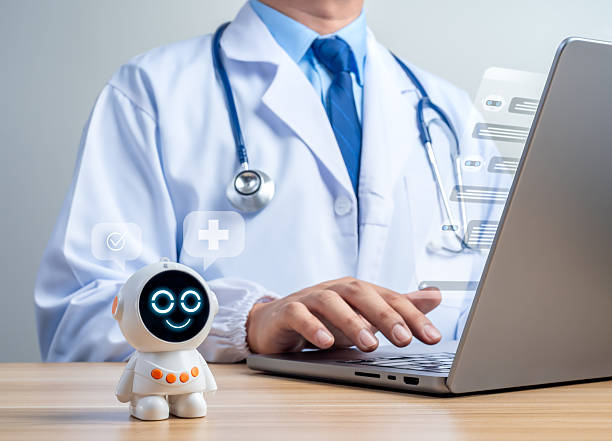
AI is designed to assist healthcare professionals and hospital teams—not replace qualified clinical judgment or independently make medical decisions.
6. AI-Assisted Doctor / Specialty EMR
AI capabilities can support specialty-specific clinical workflows.
Depending on configuration, assistance may include:
Depending on configuration, assistance may include:
7. Intelligent Hospital Analytics
Use hospital operational data to generate meaningful management insights.
Frequently asked questions
AI in healthcare refers to the use of artificial intelligence technologies to assist with tasks such as information analysis, workflow automation, documentation, data retrieval, analytics, and clinical decision support.
No. AI capabilities are designed to assist healthcare professionals. Diagnosis, treatment, prescriptions, and other clinical decisions remain the responsibility of qualified healthcare professionals.
Yes. Supported AI capabilities can work with EMR/EHR workflows to assist with patient-history review, documentation, information retrieval, and other configured functions.
Yes. Depending on the implemented capabilities and available data, AI-assisted analytics
Where natural-language analytics are implemented, authorized users can ask supported questions about hospital data and receive relevant reports or summarized insights.
Yes. AI-assisted summarization can help present relevant available patient information for doctor review.
No. AI-generated information or suggestions should be reviewed by qualified healthcare professionals and should not be treated as autonomous medical decisions.
Yes. Where configured, AI-assisted workflows can complement Nilkanth Medico HOMS and WhatsApp automation for supported communication use cases.
AI capabilities can be integrated with role and permission controls so users only access information appropriate to their authorized workflows.
No. AI capabilities depend on the selected modules, configuration, integrations, data availability, deployment architecture, and hospital requirements.
Transform Your Hospital With
Smart Healthcare Software.
Streamline workflow, improve patient care, and manage your hospital efficiently with our advanced HMS solutions.